In places like Sicily, wildlife doesn’t live around history — it lives inside it.
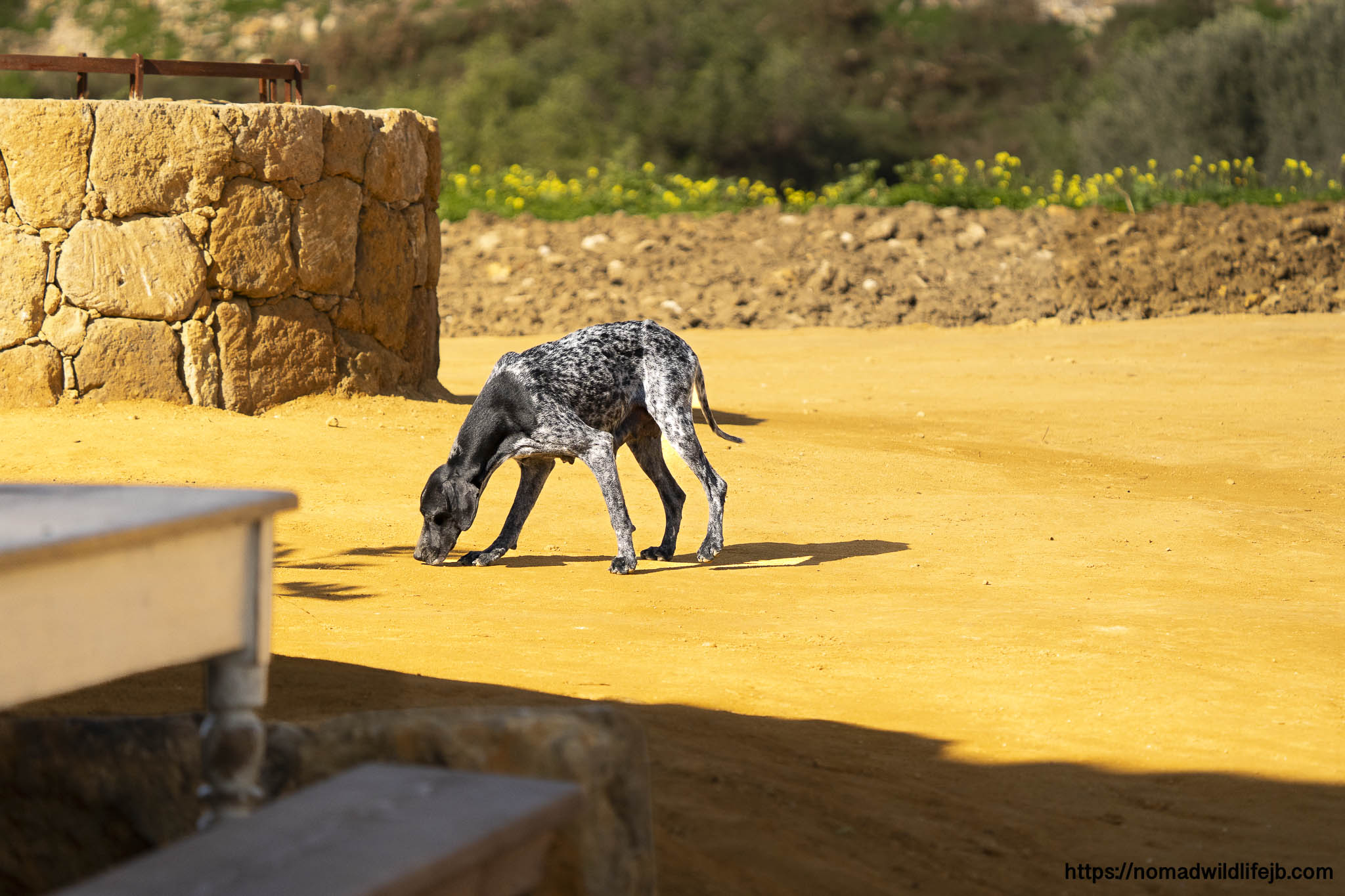
Dogs nap in the shade of fallen columns. Cats stretch across steps worn smooth by centuries of human hands. Birds nest where temples once echoed with voices we can no longer hear. These animals aren’t attractions. They aren’t symbols. They’re residents — shaped by the same geography, climate, and long memory as the ruins themselves.
Photographing them requires something different than speed or spectacle. It requires restraint.
We don’t chase moments here. We wait. We watch. We let animals decide whether they want to share space with us at all. Most of the time, that means keeping distance, lowering the camera, and allowing the scene to unfold — or not — on its own terms.
There’s a temptation, especially in historic places, to frame animals as props against ancient stone. To turn a living being into texture. We resist that. These animals aren’t part of the backdrop — they are the present, moving through the past.
Some encounters last seconds. Others stretch into quiet companionship. A dog might follow us for half a kilometer, then disappear without explanation. A cat might accept a moment of attention, then vanish into shadow. Nothing is staged. Nothing is owed.
That’s the lesson these places keep offering us: presence over possession.
When we photograph animals among ruins, we’re not trying to capture ownership of a moment — only witness to it. The image is secondary. The respect comes first.
If you’re visiting places like this, consider supporting local animal welfare groups or sanctuaries that work quietly behind the scenes. Preservation isn’t just about stone and architecture — it’s about the lives that continue alongside them.
Some stories don’t belong to us to tell loudly. They ask to be noticed gently.
That’s where Nomad Wildlife lives — in the space between looking and listening.