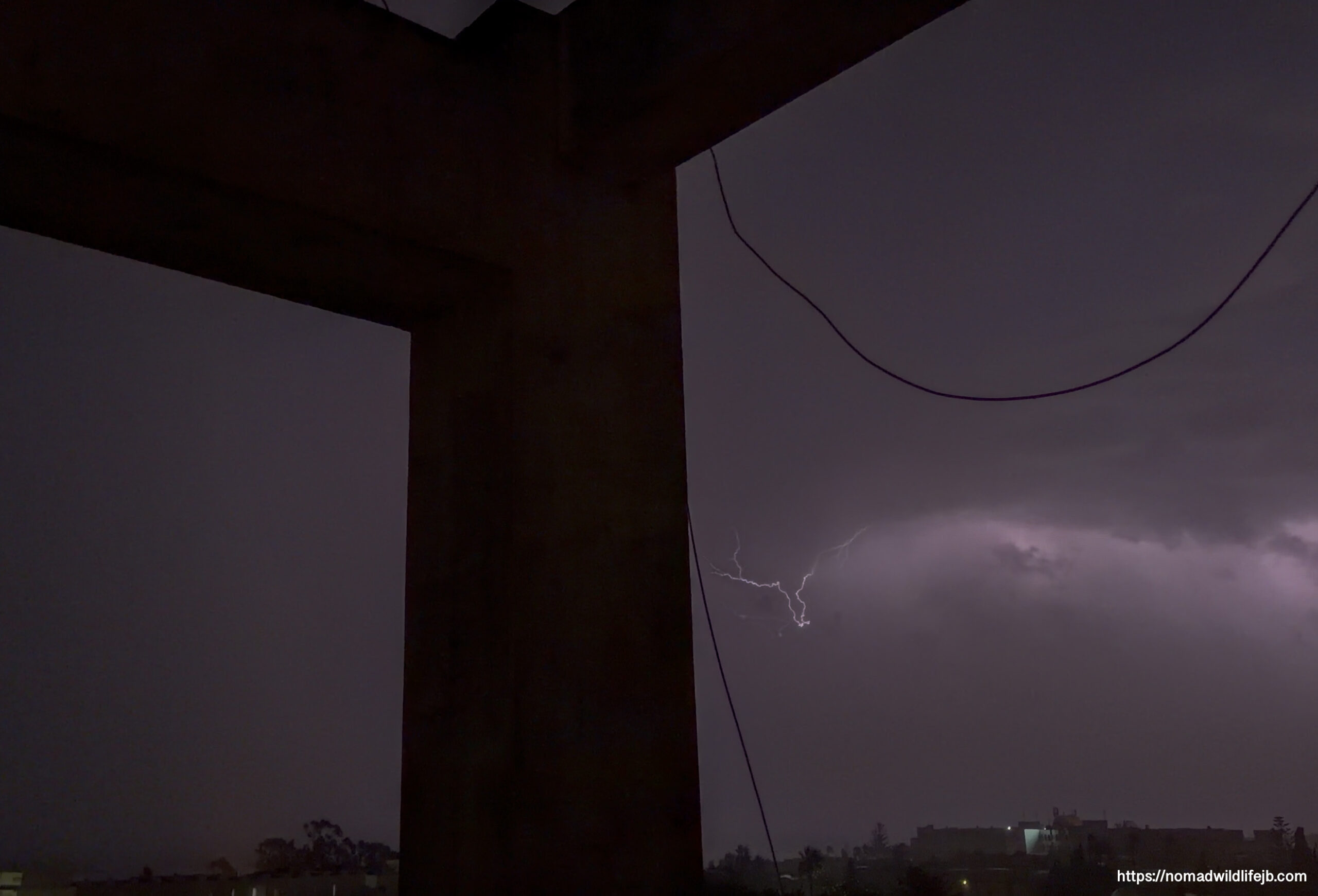
The storm did not pass through Hammamet.
It stayed.
Rain began steadily and then refused to stop. Over days, water fell in volumes large enough to erase the usual markers of the city. Curbs disappeared. Streets turned reflective and slow. Pavement stopped behaving like ground and started behaving like water.
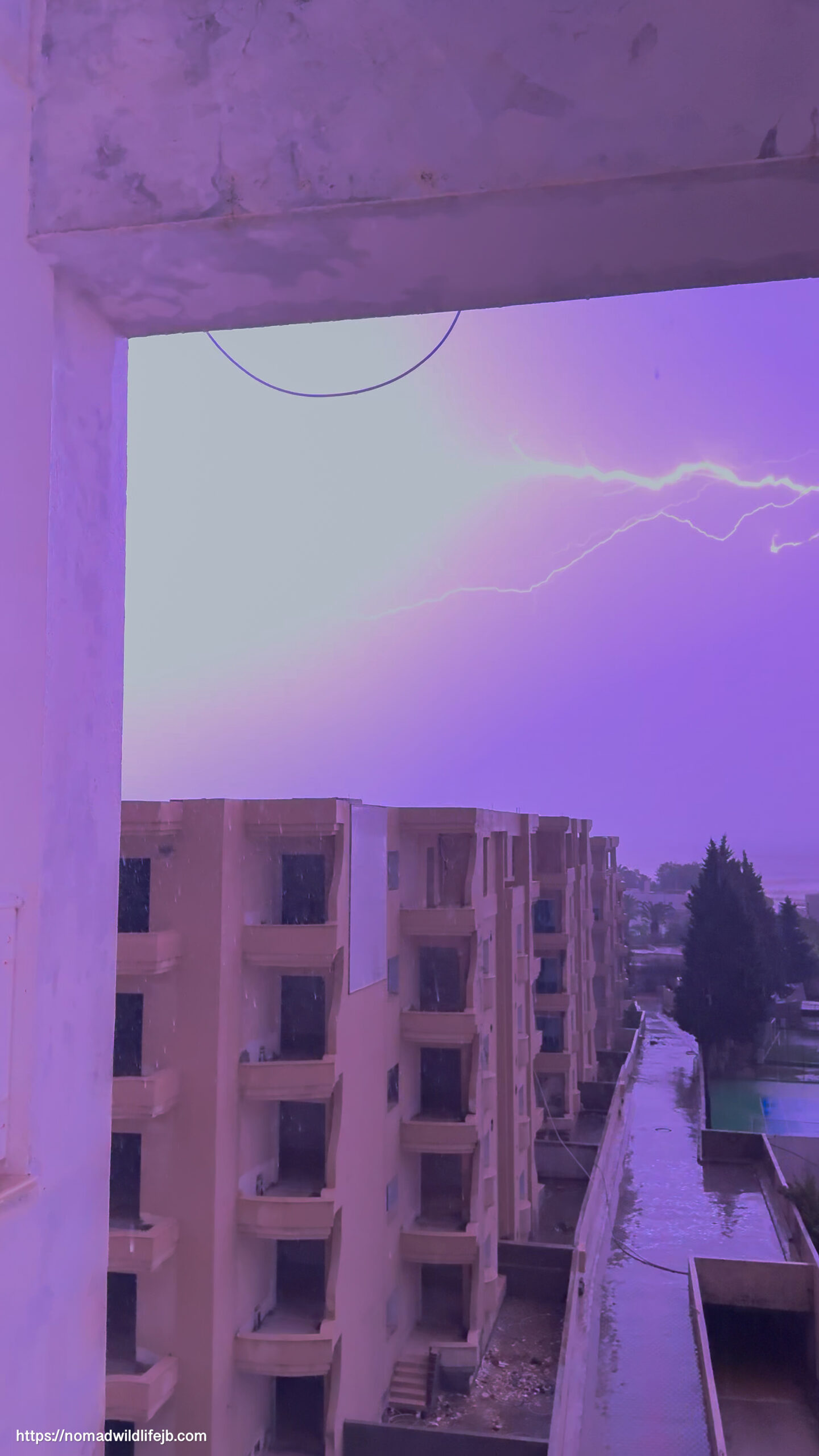
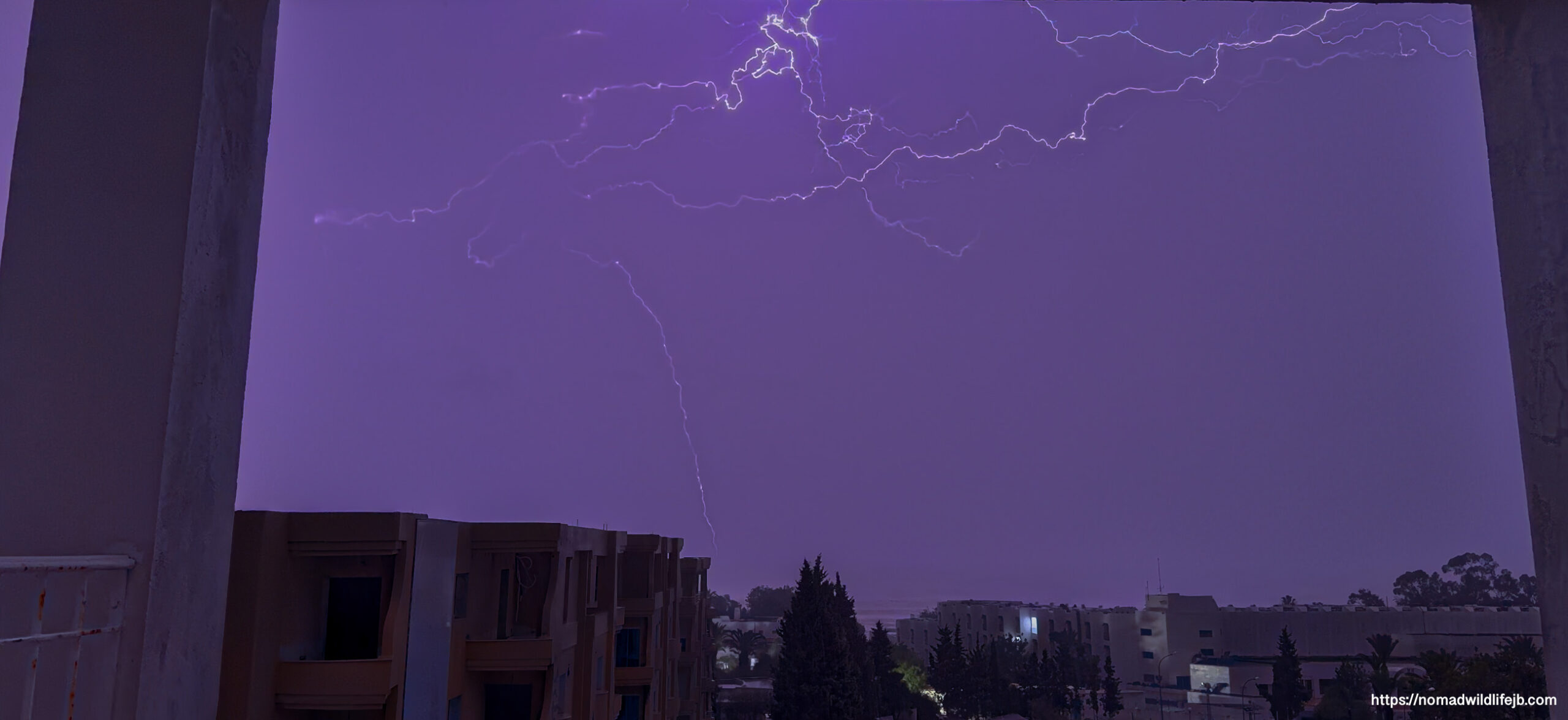
Lightning arrived early and never really left. Strikes landed close enough that thunder had no delay—flash and impact occurring at the same instant, sharp and structural, felt through walls instead of heard through air. It was not dramatic in the cinematic sense. It was thorough.
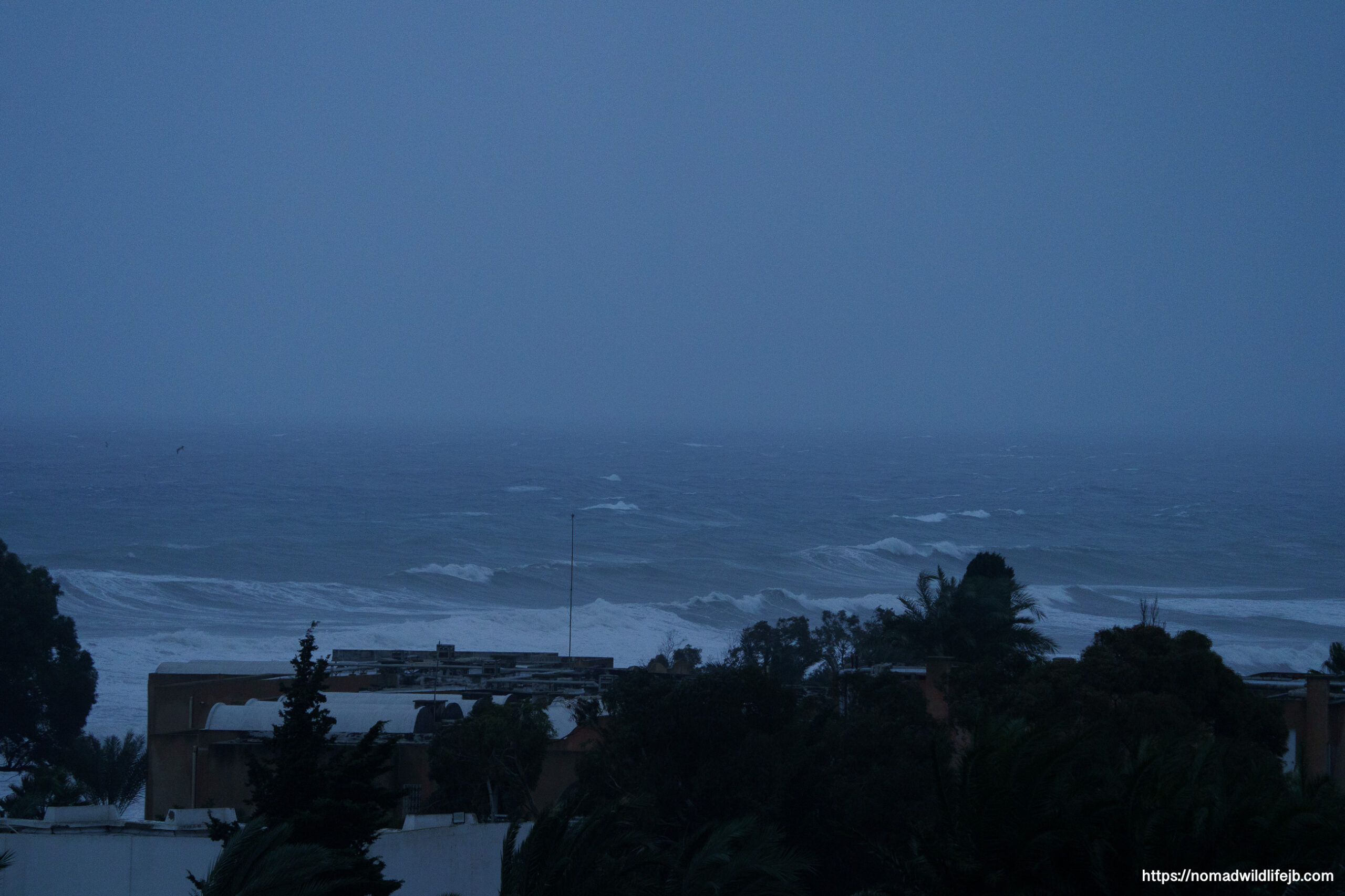
From the roof, the city flattened under rain. Buildings darkened. Trees shook themselves clean again and again. Streetlights fractured across flooded walkways. The sea beyond the buildings blurred into the sky until the horizon no longer mattered.
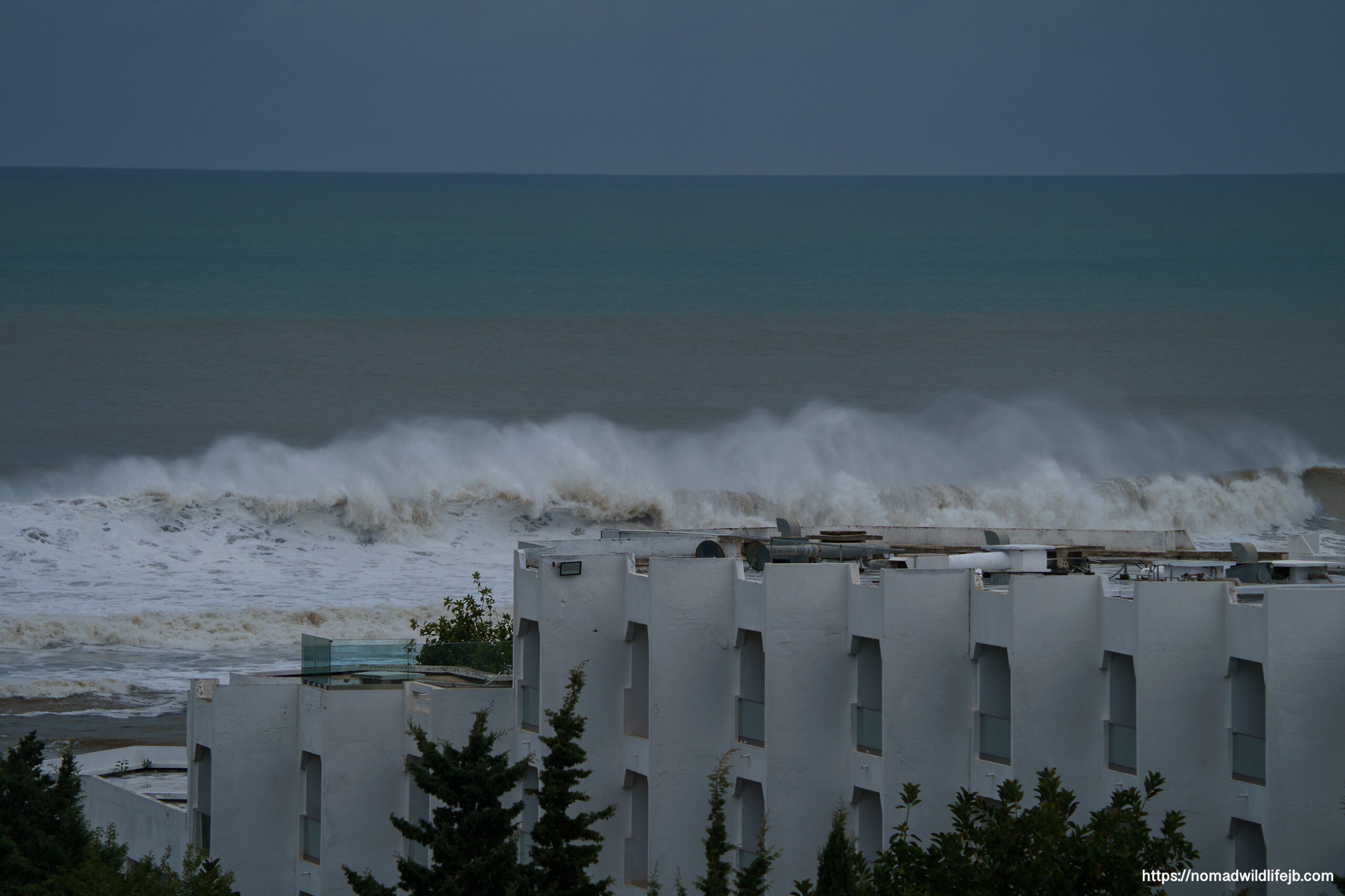
The building held.
Concrete answering electricity.
Old stone remembering what it was made for: endurance.
Hail came briefly, heavy and blunt, hammering the roof until all other sound vanished. When it shifted back to rain, it did so without pause, as if the storm had only changed tools mid-sentence.
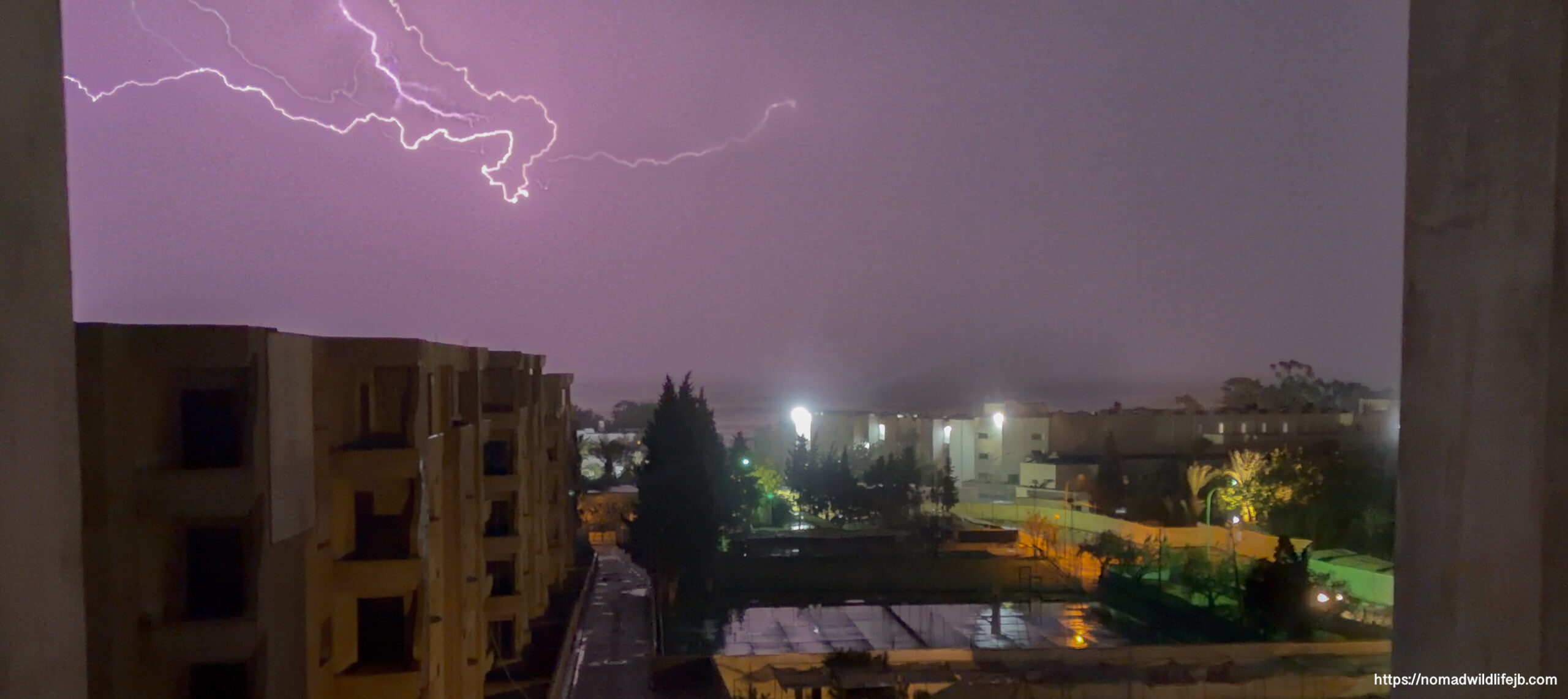
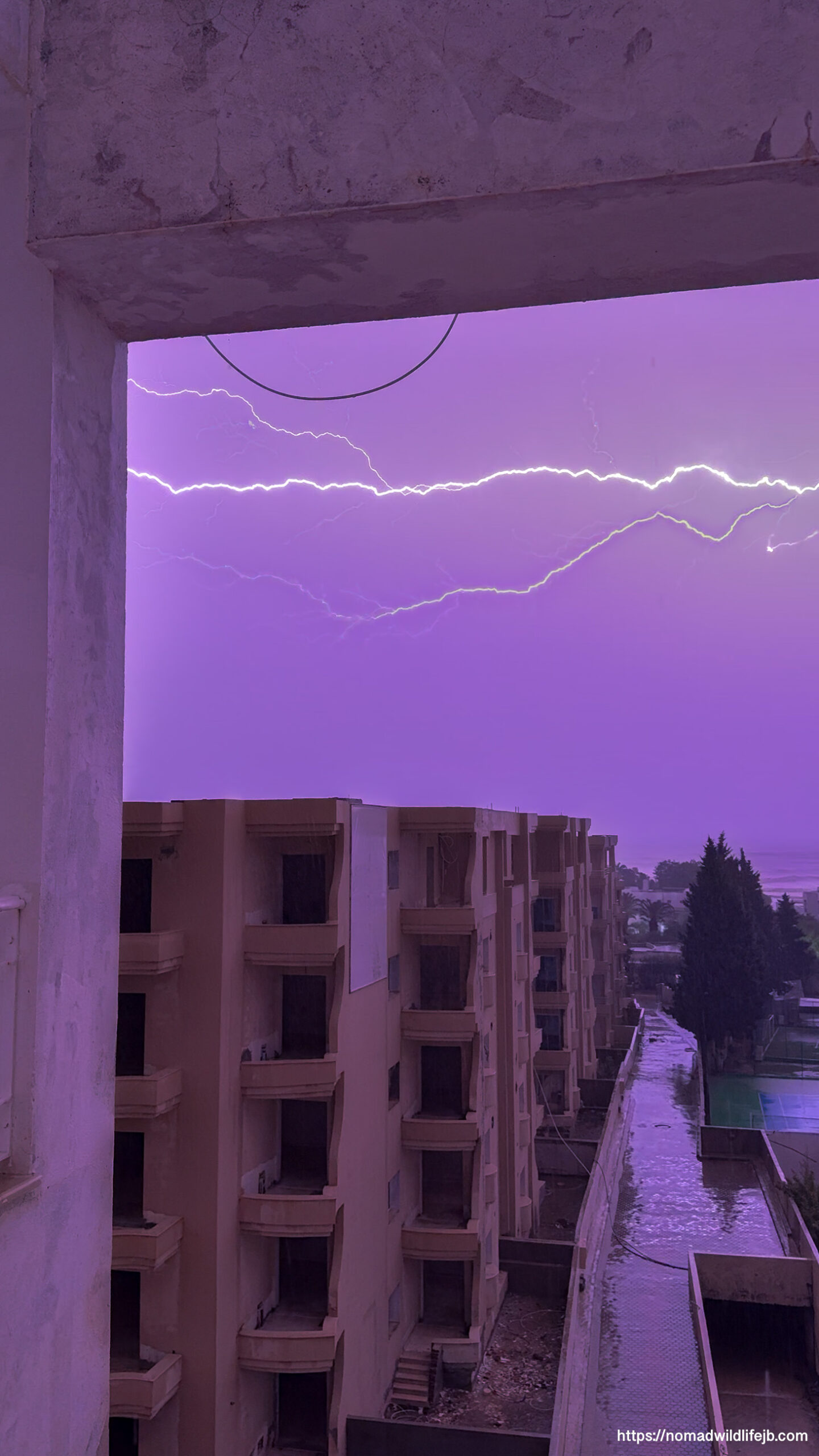
At dawn, there was no relief. Light returned, but the rain did not leave. The sky moved through shades of gray, violet, and bruised purple while lightning traveled sideways through cloud layers—branching, searching, often never grounding at all.
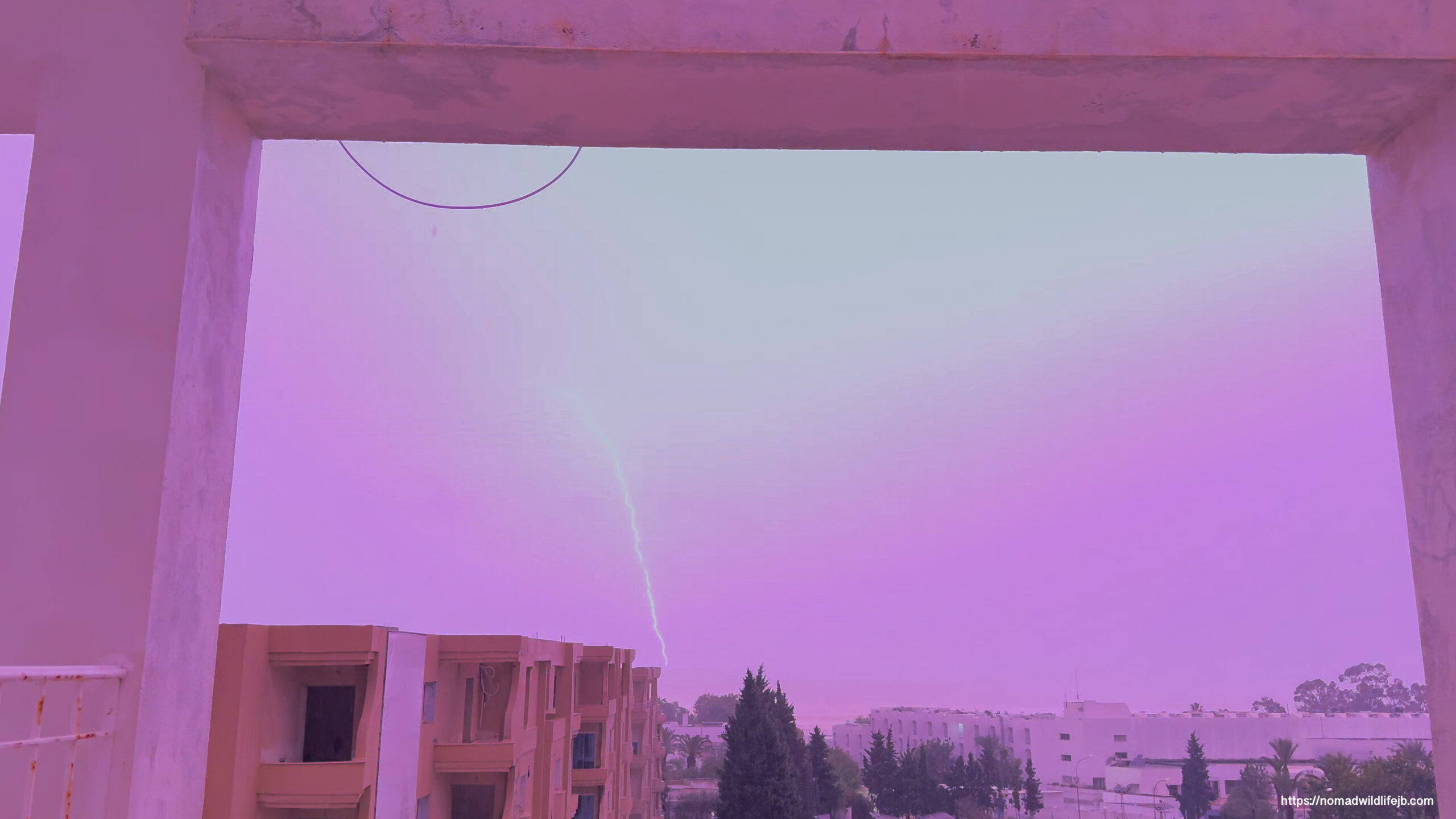
Capturing it required more waiting than shooting. Lightning is not something you take a photograph of so much as something you remain present for. Most frames held nothing. Hundreds, then thousands of exposures passed without result. Timing never lined up cleanly. Light never behaved.
You wait, you miss, you wait again. The work is repetition and patience, accepting that most of what happens will never be recorded.
A few frames stayed.
Below, a small shop opened despite the conditions. The owner stepped outside, looked once at the sky, and shook his head.
“This is too much,” he said.
By then, the storm had already made its point.
It did not threaten. It did not perform. It persisted.
Even as thunder softened from sharp cracks into long rolling waves, the rain continued unchanged. Water drained slowly. The city stayed in motion. The storm remained overhead, indifferent to whether it was admired, feared, or simply endured.
Some storms announce themselves and move on.
This one stayed long enough to show us what holding ground really looks like.
That is the work of Nomad Wildlife—staying with a place long enough to see how it responds when conditions are real, when comfort disappears, and when nature stops asking politely. We don’t chase spectacle. We wait for truth.
And sometimes, if we’re patient enough, the storm decides to show us what it has been all along.
great photos, jessi ⚡️
great photos, jessi ⚡️