An Observation of Protest in Tirana, Albania
Editor’s note — July 3, 2026:
This essay was written and published before the protests in Tirana escalated into clashes involving tear gas, pepper spray, water cannons, arrests, and reported injuries. I am leaving the piece as it was written because it reflects what I witnessed in the streets before that turn: a peaceful, hopeful, and deeply civic expression of public voice. What happened afterward does not erase that moment. It complicates it. It also makes the contrast at the heart of this essay more painful.
Protesters and counter-protesters stand on opposite sides of the street, and opposite sides of the political spectrum.
Some hold signs. Some chant. Some yell. A tired day of expression gives way to night, and with it, the fragile hope that cooler heads may prevail.
Then the air changes.
Acrid smoke spreads from canisters thrown by men clad head to toe in riot gear. Gas masks cover their faces, protecting them from the weapon they have unleashed on their own neighbors. Flash-bang grenades erupt with the violence of fireworks, but instead of bursting high above a crowd in celebration, they detonate at the feet of ordinary citizens. Pepper balls and rubber bullets cut through the air with an unmistakable sound before they impact, splitting open and contaminating the night with their spice-filled contents.
Police officers make arrests, binding people’s hands with plastic zip ties and cold metal shackles.
They are not gentle.
These are the images that now haunt the idea of protest in America.
Back home, protest can often feel less like civic expression and more like entering a tactical environment.
Something to survive.
Something to calculate.
Something to fear.
I do not write that with pride, or with contempt.
I write it with grief.
That is part of what made Tirana feel so disorienting.
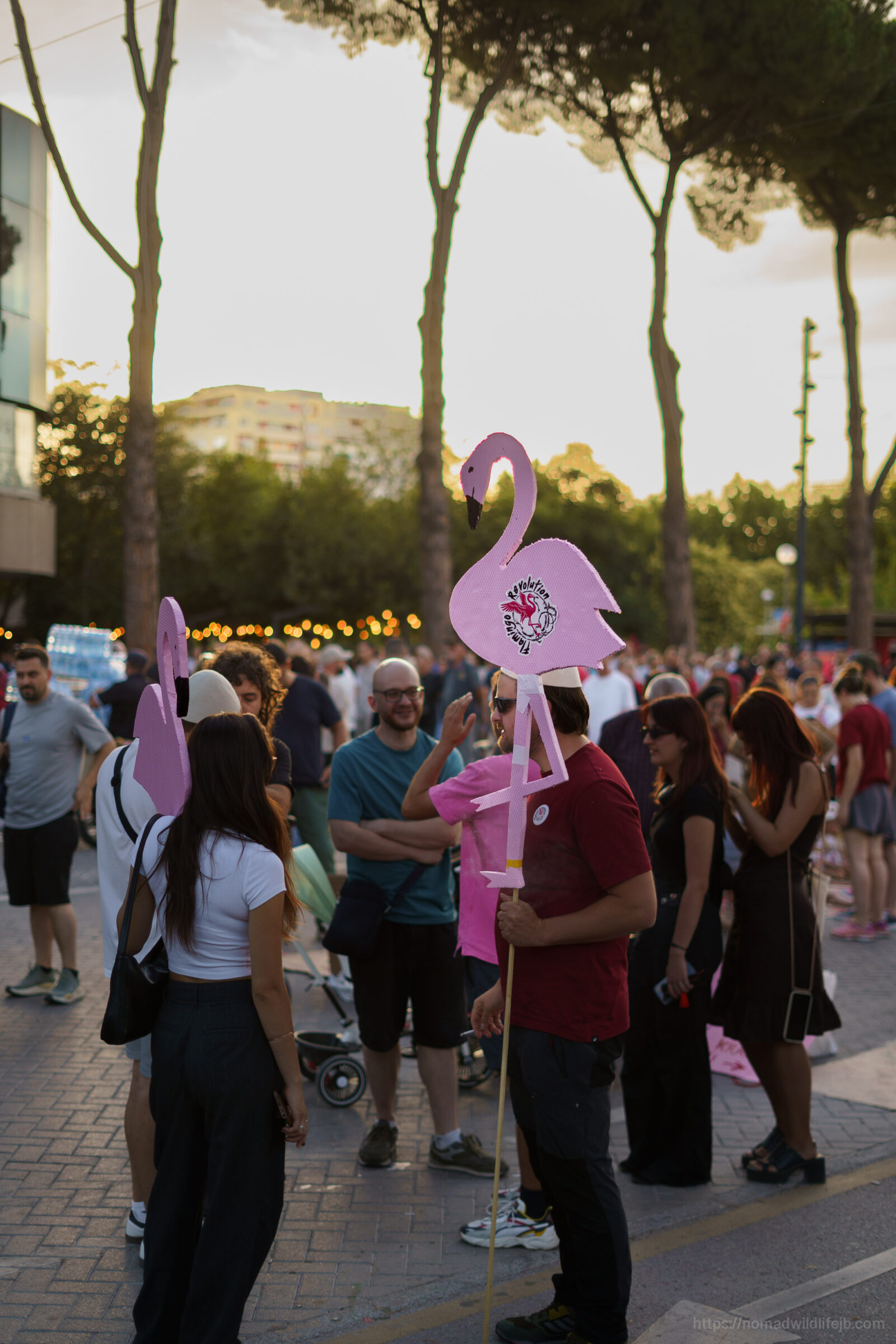
In Tirana, the protests have been ongoing since Jess and I arrived. But the Flamingo Revolution began more recently, sparked by Jared Kushner and Ivanka Trump’s proposed luxury resort development in and around some of Albania’s most sensitive wild places, including the Vjosa-Narta protected wetland and Sazan Island.
The flamingos have become more than birds in this story. They are a reminder that some places are still alive, still wild, and still worth defending.
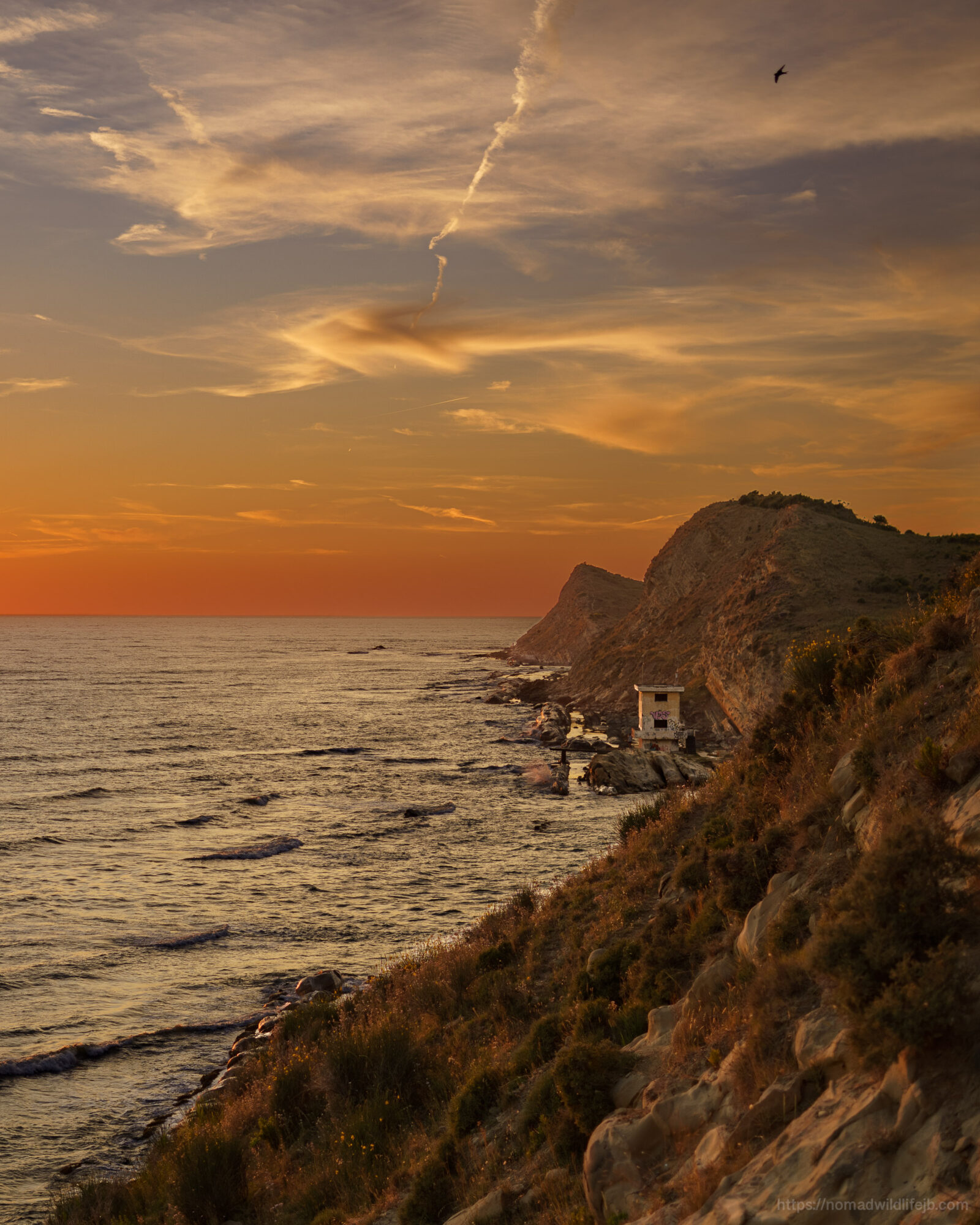
This is not entirely a story about politics.
But it would be naive to pretend that politics has nothing to do with the protection of wild places. Conservation depends on laws. Laws depend on lawmakers. Lawmakers depend on the people who elect them, pressure them, challenge them, and remind them that land does not belong only to whoever can afford to buy it.
Like it or not, protecting nature is political.
But this is not about talking points.
It is not about winning a debate.
It is not even really about the inner workings of police tactics.
It is about contrast.
It is about the strange, almost disorienting feeling of watching protest become something hopeful again.
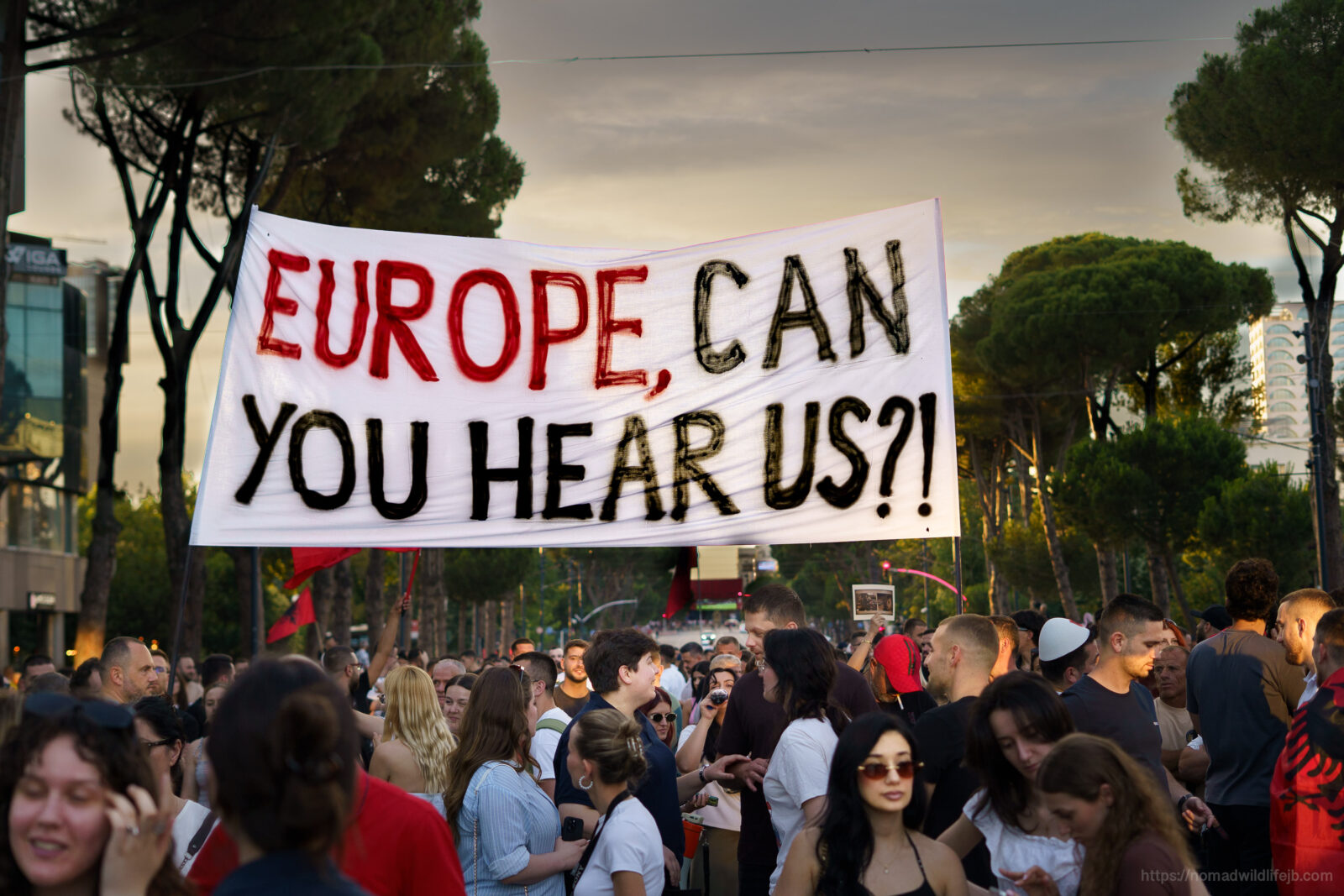
As Jess and I stood among a crowd of thousands of Albanians, we felt something we had stopped feeling at protests in America.
We saw a young father holding his child, lifting her high above the crowd so she could see.
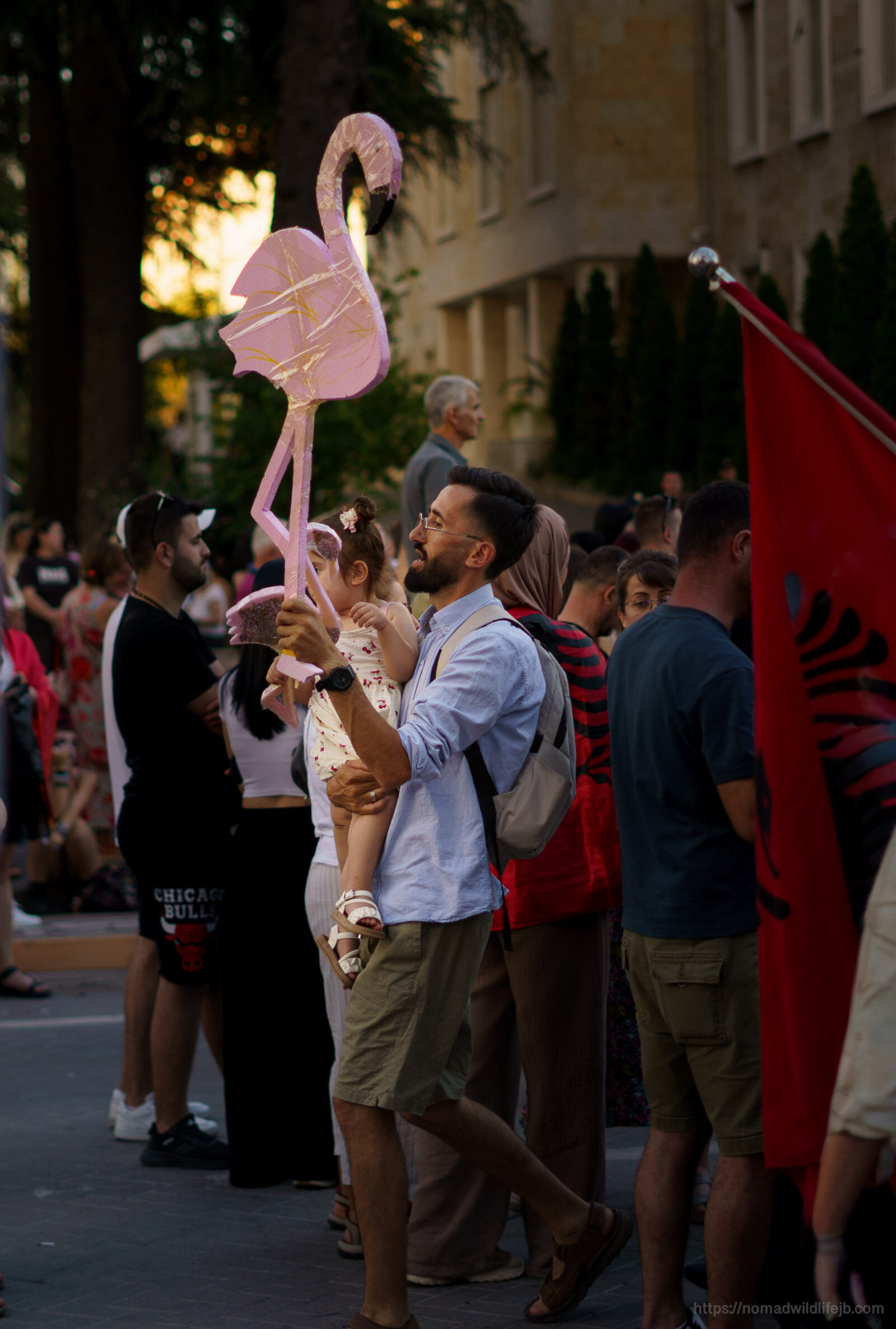
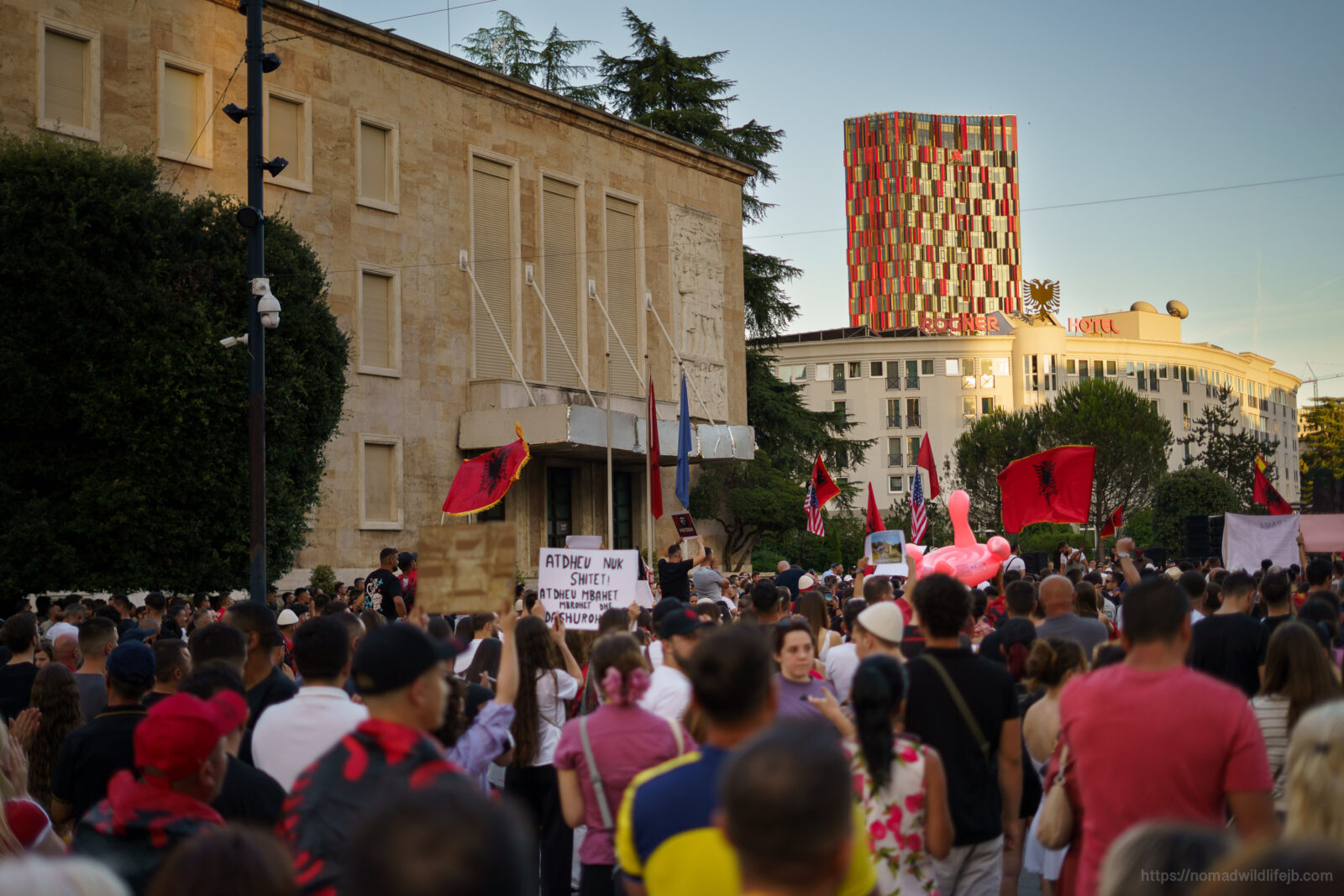
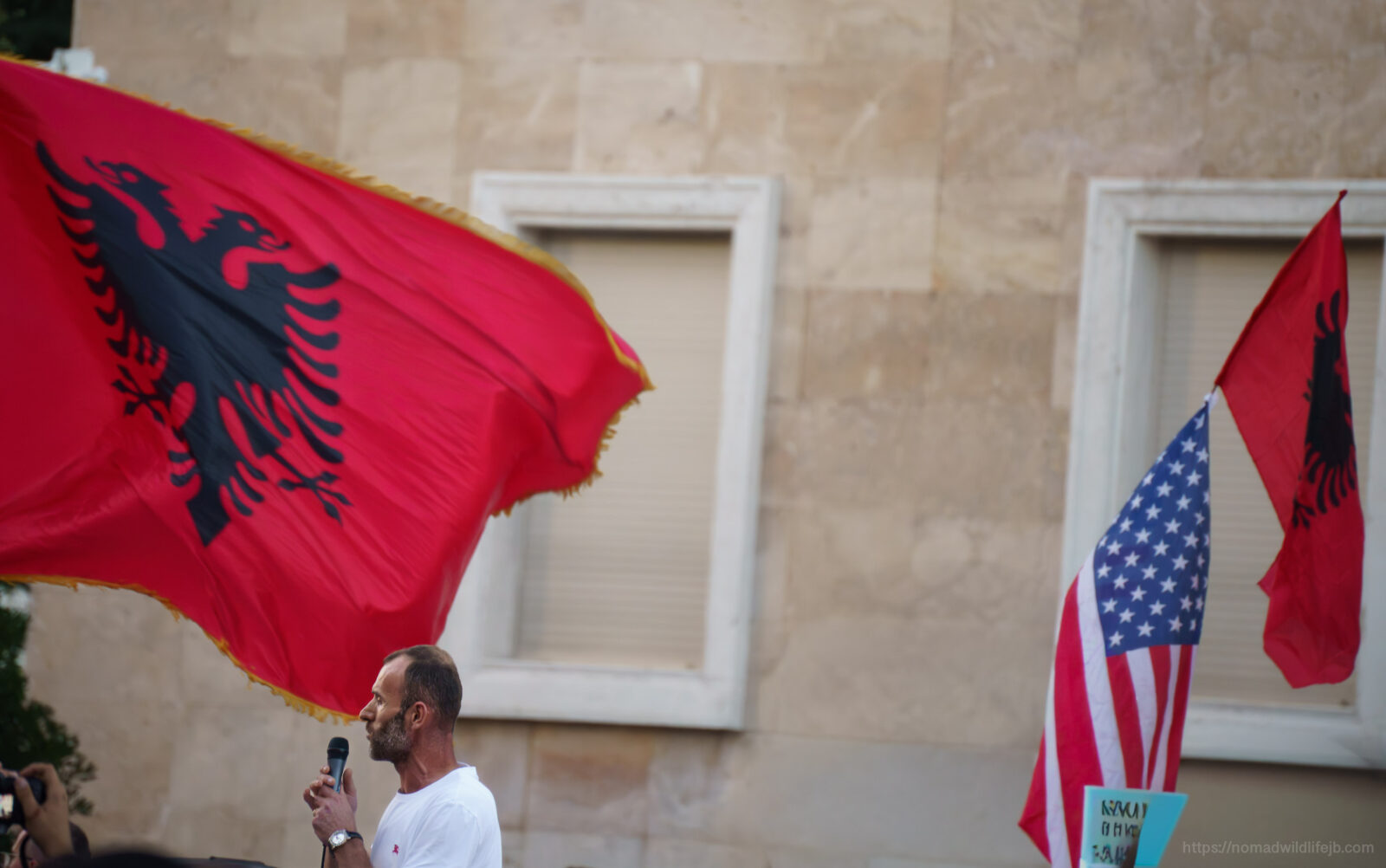
We heard the rhythmic clap of thousands of hands coming together in unison, echoing off the stone buildings around us. We saw American flags flown alongside Albanian flags in solidarity, a representation of partnership between two nations that Jess and I are too young to remember beginning, but old enough to feel grateful for.
We watched a man pause and gaze stoically toward the sky. The expression on his face seemed caught between two worlds: the pain of remembering the past, and the fragile optimism of hoping for something better.
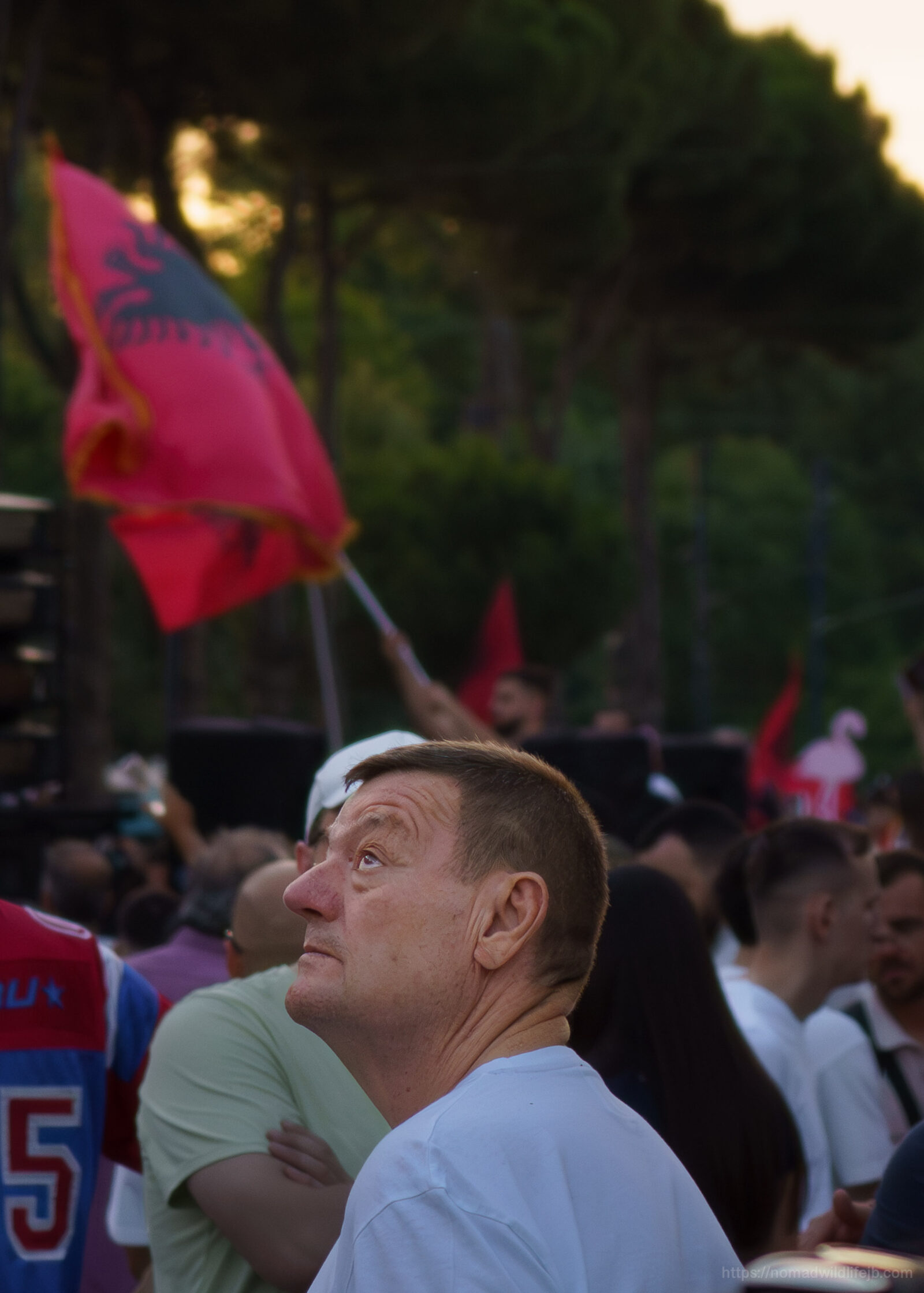
These scenes matter.
For the first time in a long time, Jess and I saw our flag flying high at a protest, and it did not evoke stress or fear. It evoked hope. It evoked freedom.
That is part of what made it hurt.
I do not hate the flag. I hate what it feels like when that symbol of freedom is carried into moments that make people afraid.
Because this time, in this place, that flag was not worn on the shoulder of an officer pulling the pin on tear gas or throwing someone to the ground. This time, it represented what we were always taught it should represent.
Back home, protest too often feels dangerous, divided, and increasingly ineffective. In Tirana, what I have seen feels different. I have not seen counter-protesters screaming from the other side of the street. I have not seen people bracing for violence. I have not seen a crowd waiting for the first canister to fly.
Instead, I have seen tens of thousands of people aligned around a shared belief that some places should remain wild.
I have seen children holding signs beside their parents, carrying hope for a future they are still too young to fully understand. I have seen dogs on leashes and dogs that belong to the streets moving through the crowd as if they, too, understand the rhythm of the gathering. I have seen elderly Albanians, people who remember a very different Albania, standing among the young with the quiet insistence that the future is still worth showing up for.
This is not an environment where people seem afraid of tear gas, pepper balls, or rubber bullets.
This is an environment of inclusion, national pride, and camaraderie.
This is an environment of hope.
This is what hope feels like when it takes to the streets.
Related reading:
The protest is only one part of the story. To understand the strange history of Sazan Island, and the wild place at the center of this fight, read The Accidental Sanctuary.